
Is dementia risk a postcode lottery?
Pint of Science is annual festival that brings researchers to local pubs and cafes worldwide. Dr Harriet Demnitz-King, Conor Durkin and Paul Harvey (PPEG member) took part in this year’s event, presenting new research about the potential for dementia risk reduction across England.
Research suggests that around 45% of dementia cases worldwide could be prevented by addressing 14 risk factors (Livingston et al., 2024). These risk factors are all things that can be changed, such as untreated high blood pressure, air pollution and social isolation. DeNPRU-QM research led by Professor Naaheed Mukadam estimates that this figure is slightly lower in England at 34.5%, reflecting that some things are already done well (such as public health campaigns to reduce smoking). However, it is not yet clear how this varies across different parts of England. In this joint project between DeNPRU-QM and the Department of Health and Social Care, we wanted to map this regional variation and produce actionable insights for local authorities.
By using publicly available data, we were able to estimate the proportion of dementia cases in each local area that are a result of these 14 modifiable risk factors. Each region received an overall figure along with information about the individual risk factors that make the biggest contribution. We then looked in detail at three things that could explain these large regional differences: deprivation, ethnic diversity, and living in a town or city. In more deprived areas, we found that more dementia cases are linked to risk factors that we can change. The same was true in more urban areas, but ethnic diversity did not appear to explain the variation we found.
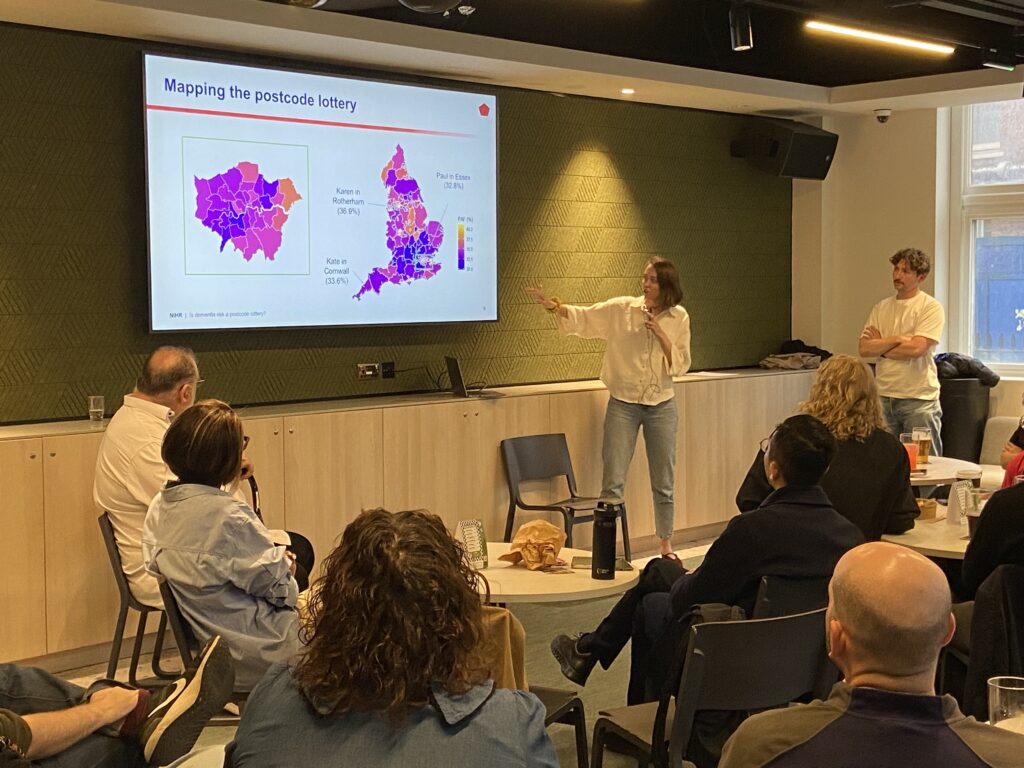
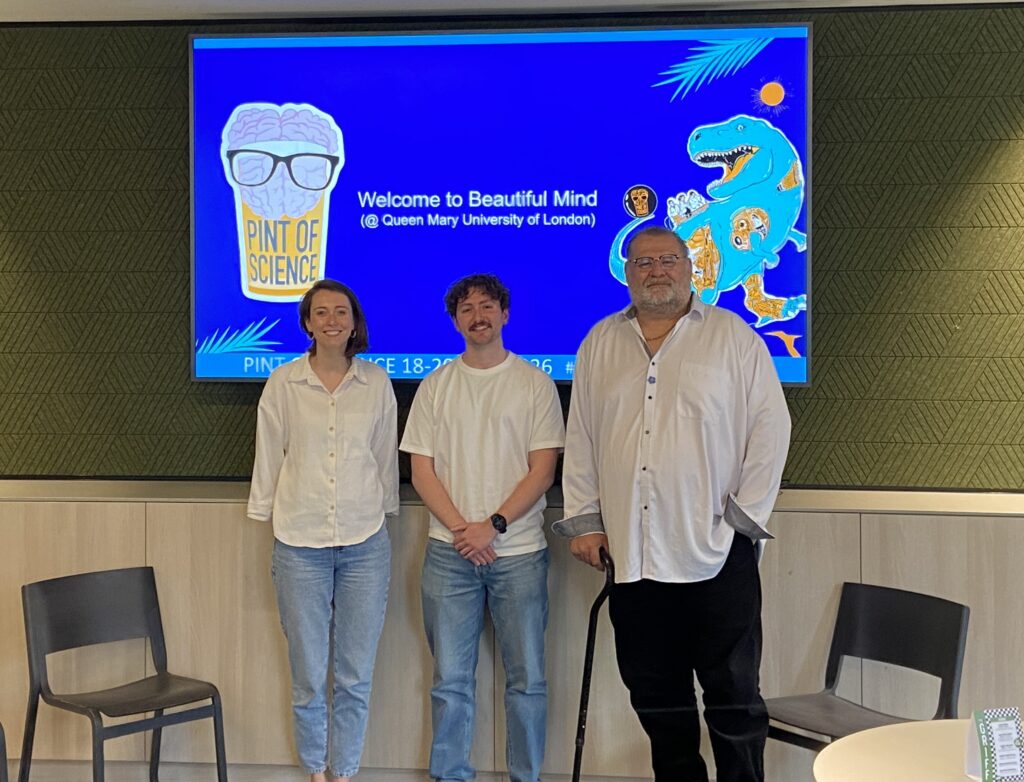
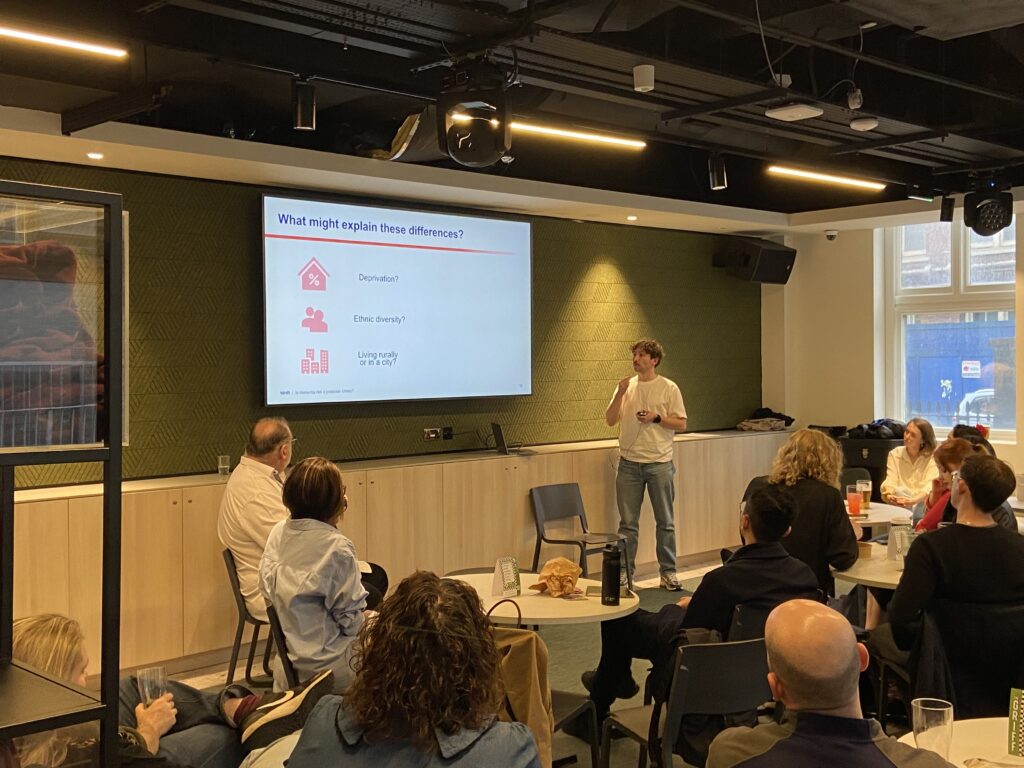
Throughout the project, three members of the DeNPRU-QM Patient and Public Engagement Group (PPEG) have worked alongside the research team to give their input. PPEG member Paul joined Conor and Harriet to present the findings at Pint of Science, sharing his perspective as someone living with dementia. He spoke about the impact of the “postcode lottery” and the importance of working in partnership with communities to co-create local solutions. This could include community hubs and support groups to combat social isolation.
Following the presentation, the speakers answered some brilliant questions from the audience. Paul talked about his journey to getting a dementia diagnosis and the importance of dementia awareness. Harriet spoke about the 14 risk factors identified in the Lancet Commission and suggested that other factors such as sleep, diet and deprivation could be considered in future research. When asked how this information will help local authorities, Conor explained that each local authority will receive a tailored report for their area so that they can invest in targeted prevention strategies.
As this project is still in progress, we will be sharing further details and study findings later in the year. If you would like to find out more about this work ahead of the publication, Conor will be presenting again at AAIC for All: Community on Thursday, 16th July. This free dementia research event is part of the Alzheimer’s Association International Conference 2026, with options to join in person or online.
Finally, we want to say thank you everyone who came along to Pint of Science – we hope you enjoyed the evening as much as we did!
References
- Livingston, G. et al. (2024) Dementia prevention, intervention, and care: 2024 report of the Lancet standing Commission. The Lancet, 404(10452), pp. 572–628. https://doi.org/10.1016/S0140-6736(24)01296-0
- Mukadam, N. (2025) Dementia Population Attributable Fractions (PAF) for England. Queen Mary University of London. Available at: https://qmro.qmul.ac.uk/xmlui/handle/123456789/107134