Raising awareness of Lewy Body Dementia
Karen Young is a member of the Patient and Public Engagement Group at DeNPRU-QM. In this reflective piece, she writes about her journey as a care partner for her husband, Alan.
Caring is a journey of unconditional love. I am Alan’s wife, best friend and primary care partner of forty-six years. We live in South Yorkshire in a multigenerational home with our daughter and two young grandchildren. Our house is full of warmth and noise, but it also reflects the daily complexity of living with dementia.
Before diagnosis, life felt expansive. With our four children grown, we were planning adventure and spontaneity. Alan was a chartered civil engineer in transport planning, and I worked as a specialist bilingual employment coach and advocate for deaf people who use British Sign Language. We were a capable, practical team, supporting each other in work and family life. Everything shifted when Alan was diagnosed with Parkinson’s disease in 2019, and later with Lewy Body Dementia in 2022.
What is Lewy Body Dementia?
Lewy Body Dementia (LBD) is often described as the “chameleon” of neurodegenerative diseases. It may present with fluctuating cognition, detailed visual hallucinations, acting out dreams and Parkinsonian motor changes. Because symptoms cross neurology, psychiatry and geriatric medicine, diagnosis is frequently delayed. Interventions such as exercise, cognitive stimulation and speech and voice therapy can have the biggest impact on quality of life for people with LBD. Medication reviews must be handled carefully, as people with LBD can be highly sensitive to certain drugs, particularly antipsychotics.
Getting a diagnosis
Our journey to diagnosis was confusing and fragmented. The earliest symptoms appeared around 2016, when Alan began acting out vivid dreams due to REM sleep behaviour disorder. He mislaid items, became unusually anxious at work, and his sharp thinking dulled. He then began to experience visual hallucinations, such as a lady sitting quietly in the corner or a dog visiting the room.
A memory clinic assessment in Birmingham in 2017 found nothing conclusive and he was advised to “concentrate more.” Meanwhile, Parkinsonian features emerged: stiffness, tremor, reduced facial expression and changes in handwriting. These symptoms were treated separately rather than recognised as part of a wider pattern. Like many families, we moved between services before Lewy Body Dementia was formally identified. In total, it took over four years.
Diagnostic rates vary geographically. In Alan’s case, multiple professionals were involved before the full picture was recognised. I strongly encourage clinicians to explore the DIAMOND Lewy Toolkits developed by Newcastle University to support earlier, more accurate diagnosis. Above all, health professionals need to remember the person behind the diagnosis and the caregiver beside them. Having someone ask, “How are you feeling?” changed everything for me.
Finding support and raising awareness
When Alan was diagnosed, we were given very little information. I felt isolated and confused, but I made it my mission to learn. Finding the Lewy Body Society and Rare Dementia Support was transformative as they provided clear, reliable information and, crucially, validation. The Lewy Body Society funds Admiral Nurses through Dementia UK, and support from a Consultant Admiral Nurse has been a lifeline. Rare Dementia Support offers 1:1 support and peer-led monthly online meetings as well as in person education days. These spaces remind me that I am not alone and have empowered me to advocate confidently for Alan.
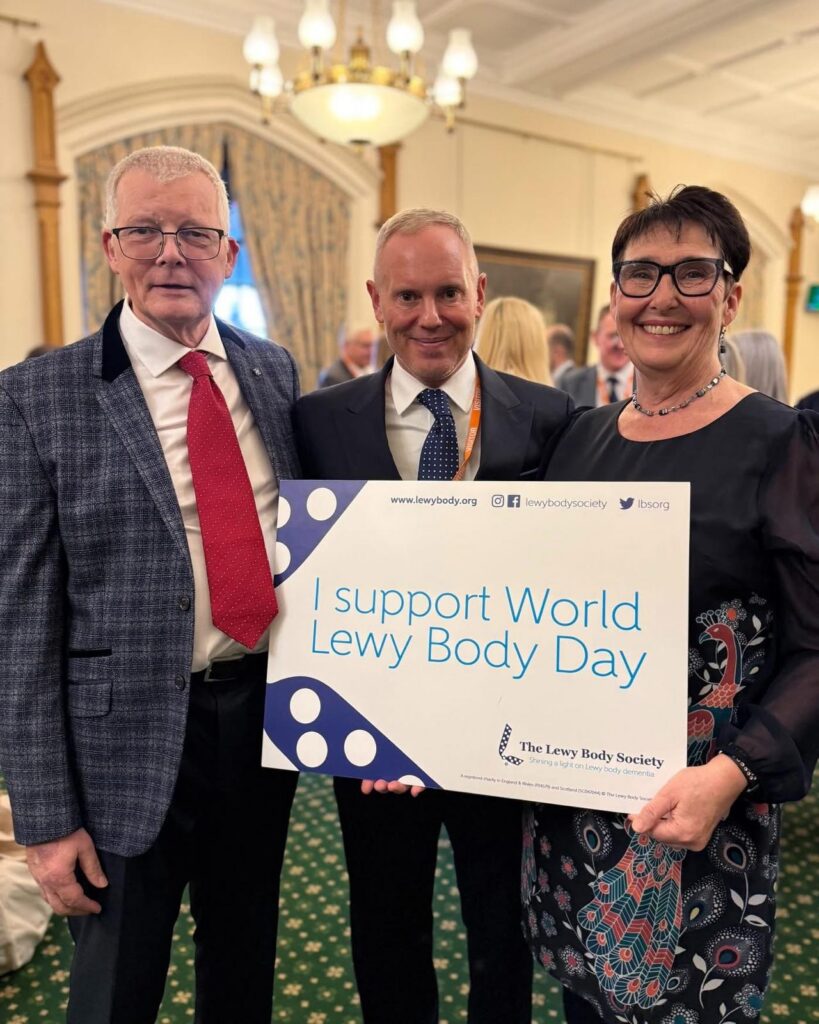
I now volunteer with both charities, speaking at training events and conferences to improve clinicians’ understanding and families’ experiences. Alan and I recently attended the Lewy Body Society’s 20th Anniversary celebration in Parliament, reinforcing the shared mission to influence policy and support families. We also feature in a short film produced by the Society called What is life with Lewy Body Dementia really like? The film gives an honest and informative introduction to LBD – I’d encourage you to watch and share it.
Building a community
The post-diagnostic support available for LBD often depends on where you live and who you see. With encouragement from our local Memory Service and support from Voluntary Action Rotherham, we established a peer-led LBD group in Rotherham. It is a safe space to speak openly about the distinctive features of LBD and share experiences, practical strategies and hope. I felt so alone after Alan’s diagnosis, but being able to set up a support group for other families has given me so much joy and purpose.
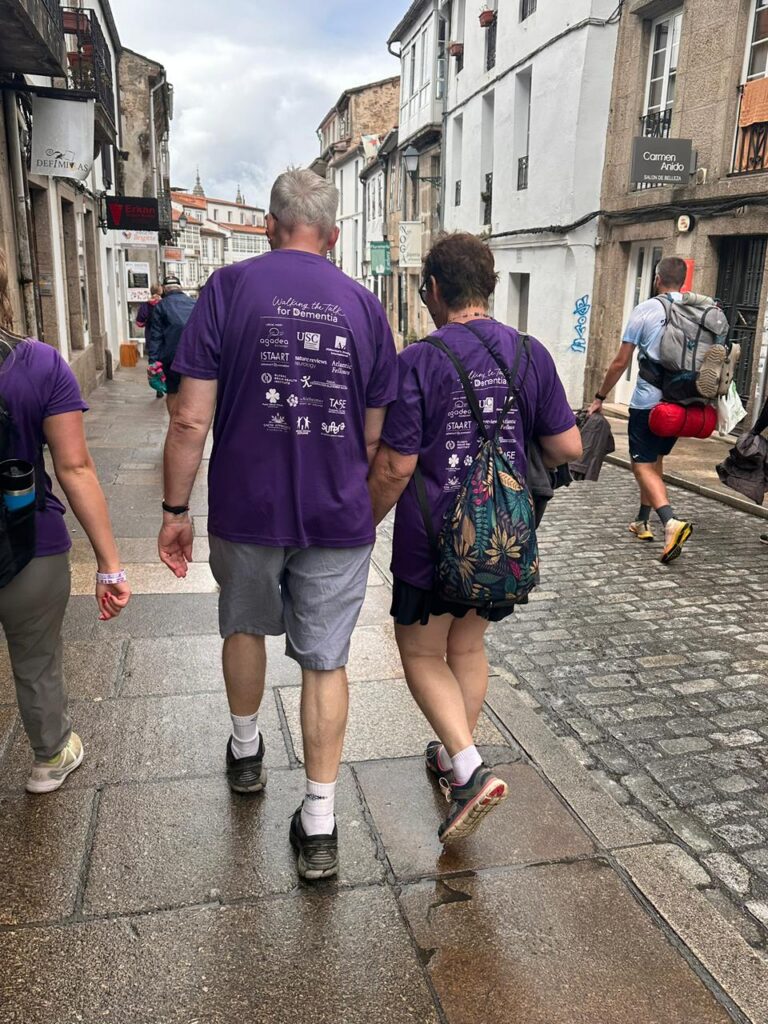
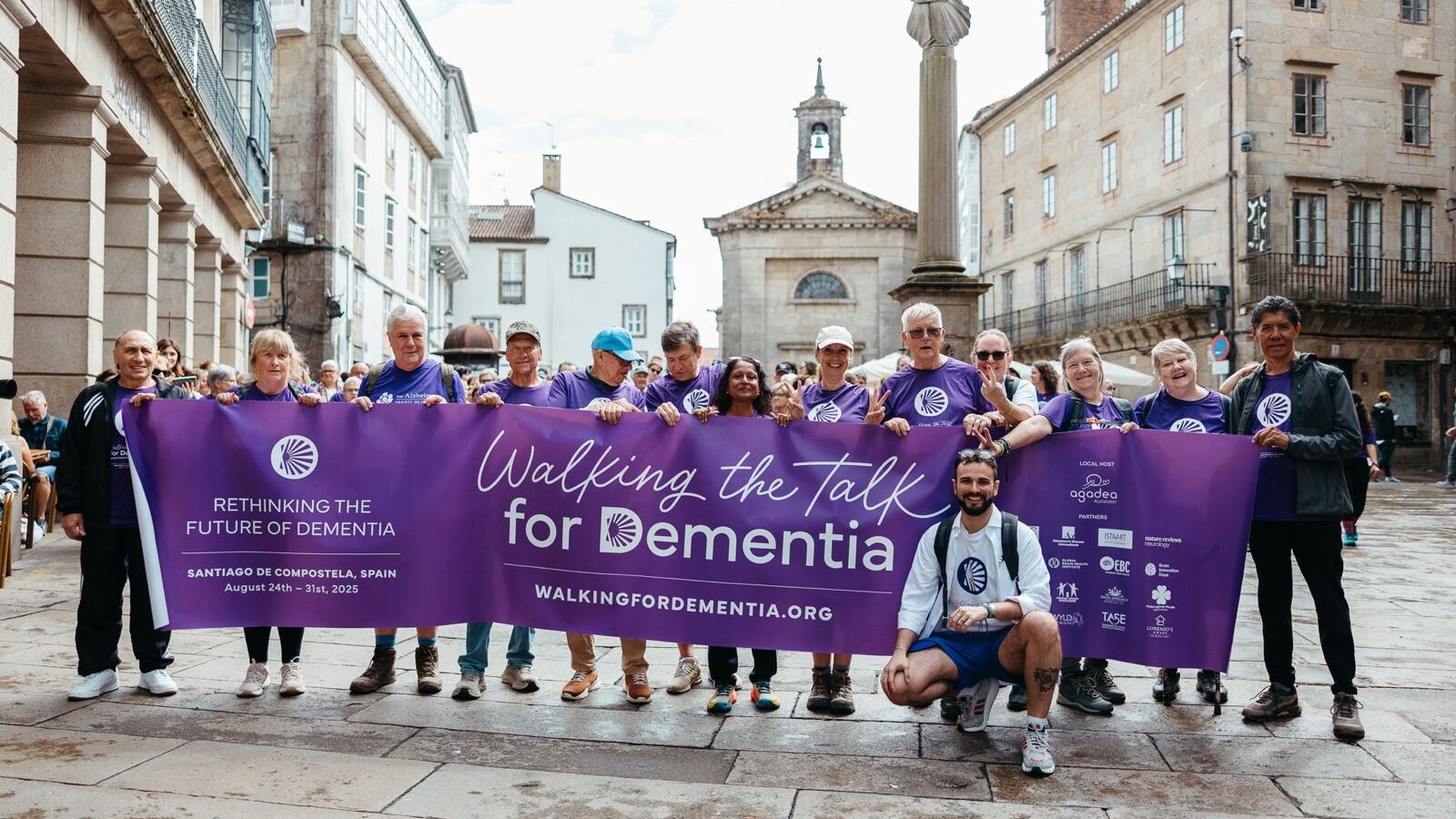
We are also part of the Walking the Talk for Dementia community, taking part in 2024 and 2025. This is an annual event that involves walking part of the Camino route and taking part in a symposium, sharing our experience and learning from each other. In that community, status disappeared: we walked alongside clinicians, researchers and families as equal partners. As the week progressed, I saw Alan walk taller, speak fluently and connect without fear. When dementia narrows your world, connection can widen it again.
Life has changed profoundly for me and Alan over the past few years. Alan now needs supervision, reassurance and support with daily activities. Yet there are still moments of connection: a shared smile, reading with our grandchildren, glimpses of the Alan I have always known. We are trying to do things together while we can, such as attending a weekly non-contact boxing group that keeps us active and connected. What sustains me is love, commitment and the determination to honour Alan’s life and dignity, even as words and memories fade. I am, and always will be, his warrior.