
The importance of being a carer
Nicola Handley is a member of the Patient and Public Engagement Group (PPEG) at DeNPRU-QM. To mark Carers’ Week 2025, she has written about her experience of caring for her mum.
Hi, my name is Nicola and I live in Wakefield in Yorkshire. I work as a lawyer, have two children, a Labrador, and I also have the important role of being a carer for my mum, Meena.
My mum was diagnosed with Parkinson’s in 2011, and life didn’t really change much. We knew her condition would progress, but she did so well that she used to laugh about the diagnosis. Everything changed in lockdown in 2020 when she was diagnosed with Parkinson’s-related dementia. Suddenly, she couldn’t remain at home by herself, go out alone or remember to take her medication. She started to experience hallucinations and had a severe episode of psychosis that required hospital care.
Thankfully, with clinical support and lots of love, she made a good recovery and was able to return home. When my sister moved away to Dublin, my mum relocated to Yorkshire to be closer to me. With the support of carers and social services, life settled down. My firm had put in place a “Flexible by Choice” working policy, meaning I could take time out for hospital appointments, do mum’s shopping or simply go for a walk whilst still working full time.
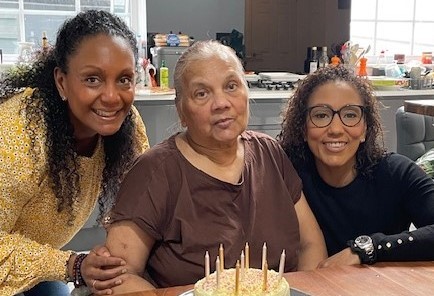
In 2023, my mum was diagnosed with Progressive Supranuclear Palsy (PSP), a rare neurological condition that shares some early symptoms with Parkinson’s disease but progresses more quickly. Living with multiple long-term conditions is never straightforward, and life changed again after her PSP diagnosis.
My mum suffers from excessive tiredness, frequent falls, and her moods can be very low. She’s had to move into a care home, something she never wanted to happen. I felt guilt and sadness at the decision, but I knew there was no way she could have continued to live at home safely. Although it’s been challenging, it’s also been a blessing to spend more time with her as a daughter rather than just as a carer.
Making a Difference for the Future
My mum worked as a nurse for 35 years and always wanted to help and support others. I knew that, if she could, she would want to get involved in shaping research, and that’s why I decided to join the DeNPRU-QM Patient and Public Engagement Group (PPEG). It’s fantastic to be able to turn a negative into a positive and use my lived experience to make a difference for other people living with dementia and PSP. I can’t attend every meeting—juggling work commitments is hard—but whenever I do, I leave feeling involved in policy research and connected to other people in similar circumstances.
Through the PPEG, I’ve also been involved in the Delirium Matters project that explored priorities for delirium care and opportunities to make a difference. At first, I’d never heard of delirium and didn’t know what it was. When the researchers leading the project shared a video and told me about the condition, my sister and I were shocked that this was something my mum experienced regularly. It amazed both of us that people didn’t refer to delirium properly or reduce the impact by managing it more effectively in the right environment, which is often at home.
After the project started, my mum had two emergency admissions into hospital. Sadly, on the first occasion, she developed delirium and no longer knew her name or who I was. When she was discharged, she had trouble speaking, and it took at least eight weeks for her to improve. At no point did anyone refer to delirium.
Thankfully, on the second occasion, I was able to use my new knowledge from the project and my experience as a lawyer to advocate on her behalf and have her discharged home to receive care in the community. This time, she bounced back quickly and didn’t develop delirium. I’m confident in speaking to professionals and will often ask for alternative solutions, but I worry about the people who can’t do the same. Being part of this project is a way to help them, too.
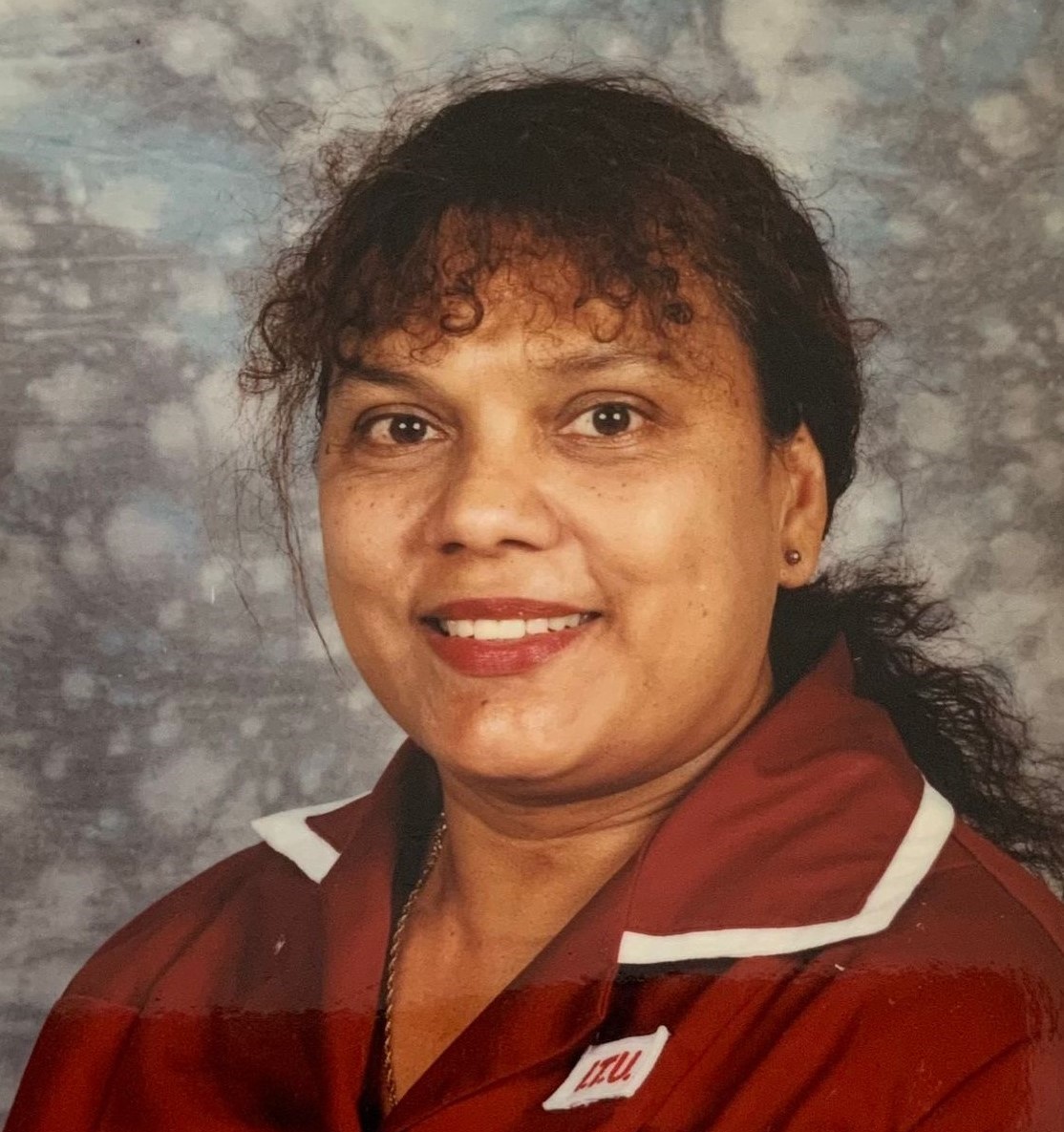 Meena at work as a Clinical Nurse Specialist
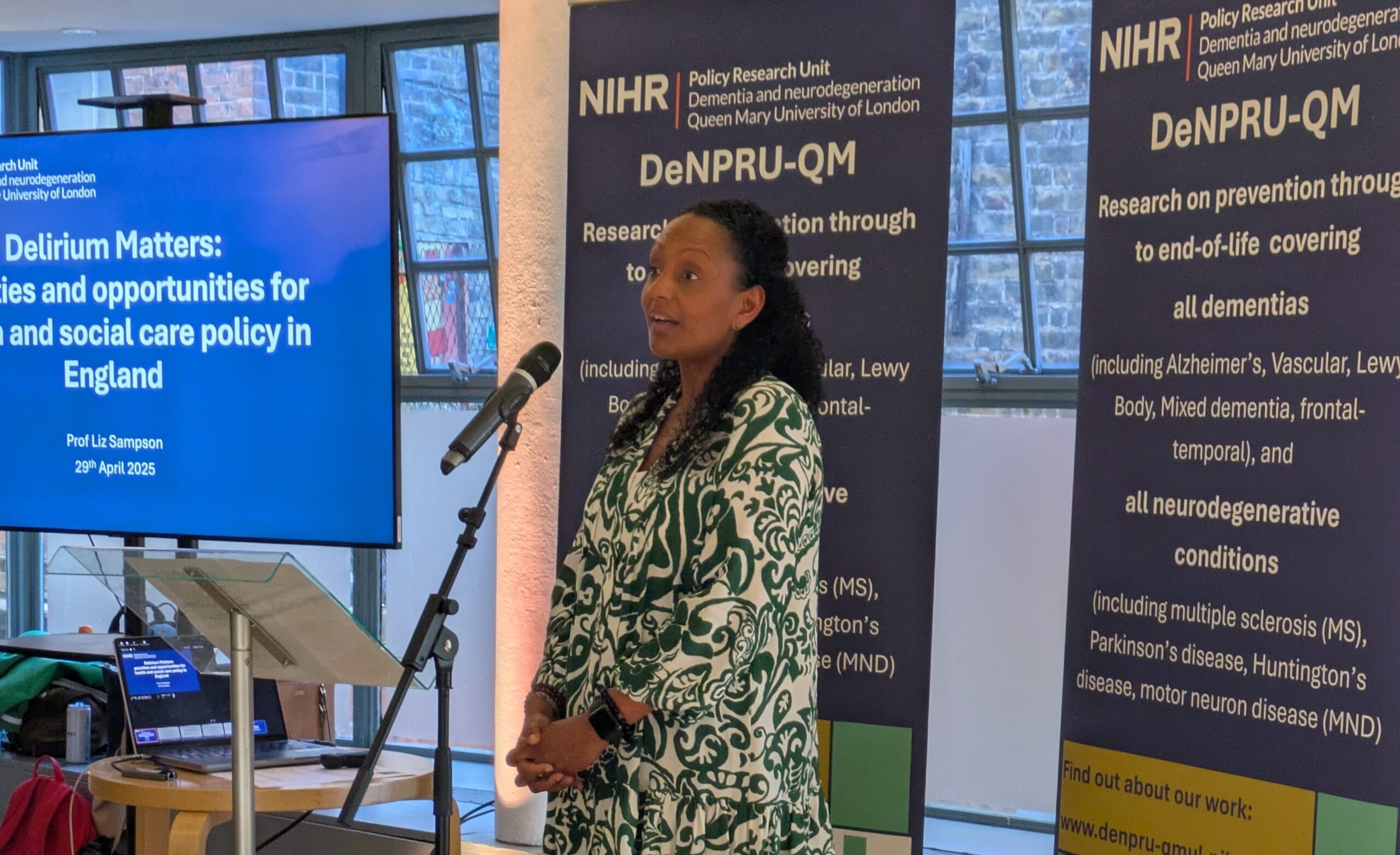 Nicola speaking at the launch event of the ‘Delirium Matters’ report
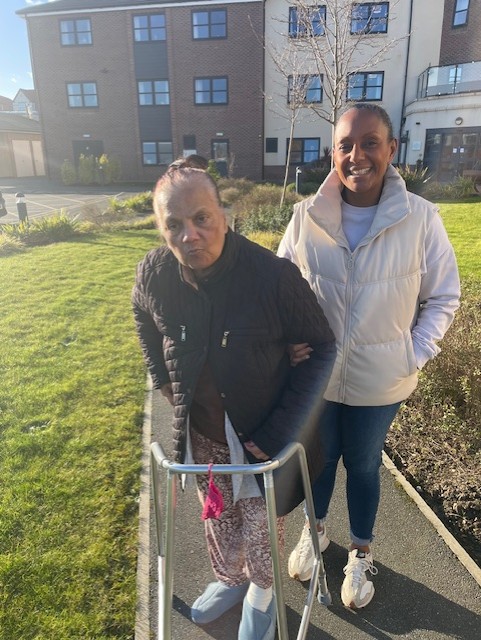 Nicola and Meena going for a walk
The Unexpected Joy of Being a Carer
This Carers’ Week, it’s important to focus on the role that many unpaid carers have in society and how we can improve their circumstances. However, we also need to take time to recognise the opportunity for so many carers to make a difference. I would encourage anyone who has the time to get involved in research, even if it’s simply spending five minutes completing a survey or reading an article. I feel really privileged to be able to give something back to others and shape the policy of tomorrow.
My mum is my best friend and has always been one of the funniest, kindest and strongest people I’ve known. It is devastating to see how much of that character has disappeared because of her conditions, but it’s important to me to make the most of the good times, experience joy when we can through different experiences and continue to ensure she has the best care possible.